
Galaxian
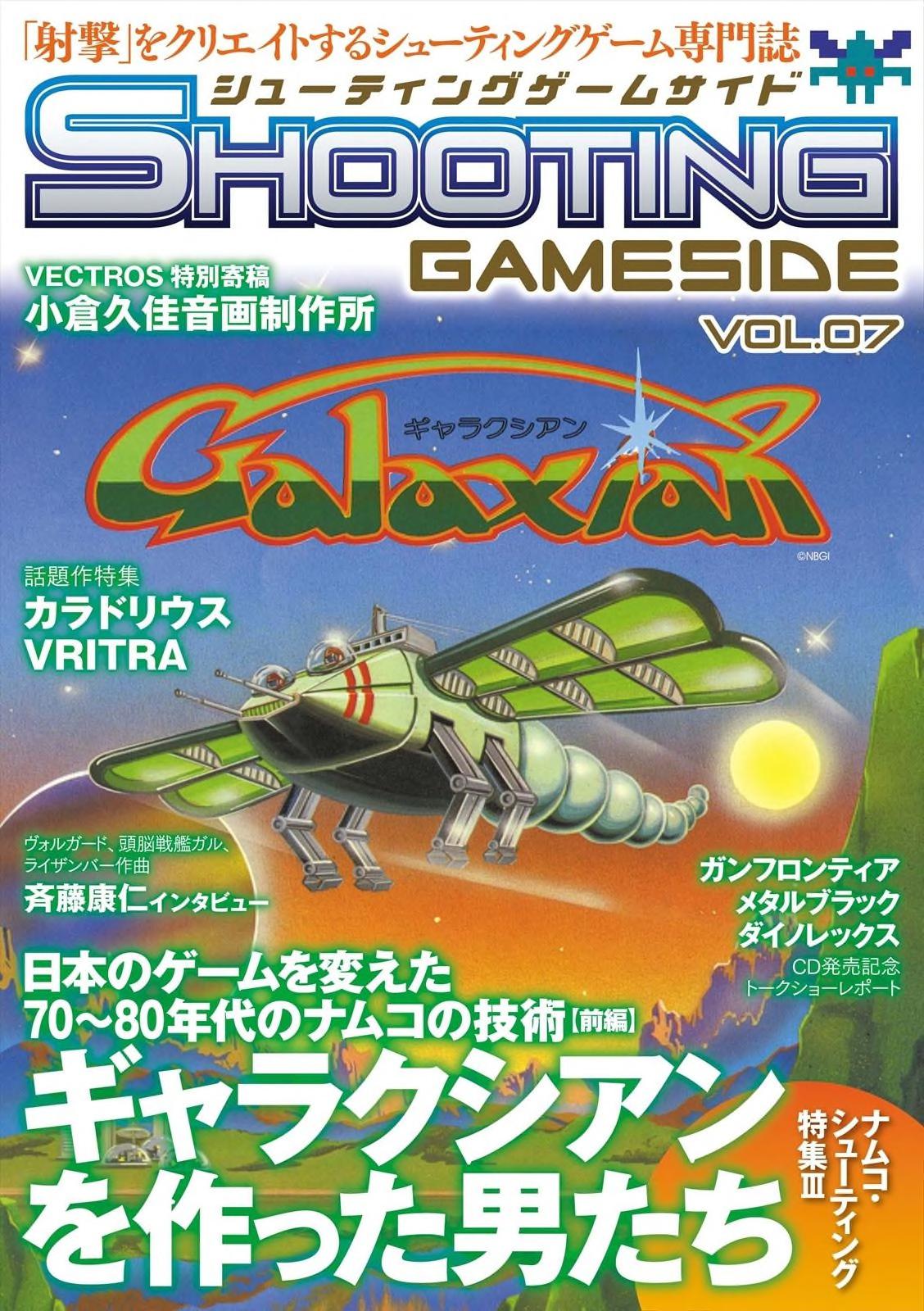
Galaxian is a shooter arcade game developed by Namco in 1979. It was released by Namco in Japan and a few months later by Midway Games in North America. The game was developed to compete with Taito Corporation's Space Invaders, released a year earlier, and featured a similar space theme. The player controls a space ship in the bottom part of the screen and shoots at enemies descending from the top of the screen. The game was received very well by the public and has continued to be a game with a competitive community to this day. It was followed by a successful sequel called Galaga in 1981 and two less known sequels called Gaplus in 1984 and Galaga '88 in 1987. Galaxian was one of the most popular games in the golden age of arcade video games.
SCREENSHOTS
PHYSICAL
HISTORY
Galaxian is a 1979 fixed shooter video game developed and published by Namco for arcades. The player assumes control of the Galaxip starfighter in its mission to protect Earth from waves of aliens. Gameplay involves destroying each formation of aliens, who dive down towards the player in an attempt to hit them.
Designed by company engineer Kazunori Sawano, Galaxian was Namco's answer to Space Invaders, a similar space shooter released the previous year by rival developer Taito. Space Invaders was a sensation in Japan, and Namco wanted a game that could compete against it. Sawano strove to make the game simple and easy to understand. He was inspired by the space combat scenes in Star Wars, with enemies originally being in the shape of the film's TIE Fighters. Galaxian is one of the first video games to feature RGB color graphics, and the first to use a tile-based hardware system, which was capable of animated multi-color sprites as well as scrolling; the latter was limited to the starfield background while the game itself remained a fixed shooter.
Galaxian was Namco's first major arcade video game hit. It was the second highest-grossing arcade video game of 1979 and 1980 in Japan and the second highest-grossing of 1980 in the United States, where it became one of the best-selling arcade games of all time with 50,000 arcade units sold by 1982. The game was celebrated for its gameplay and use of true color graphics. In retrospect, it has gained fame for its historical importance and technological accomplishments as one of the most important in the golden age of arcade video games. Its success led to several sequels and reimaginings, most notably Galaga (1981), which surpassed it in popularity. Galaxian has also been ported to many home systems and is included in numerous Namco compilations.
Gameplay
Galaxian is a space-themed fixed shooter video game. The player controls a starship called the "Galaxip", the objective being to clear each round of aliens. The enemies appear in formation towards the top of the screen, with two escort ships, labeled the "Galaxian Flagship" or "Galboss", which take 1 shot to destroy. Aliens, known as "Gorgs", will make a dive bomb towards the bottom of the screen while shooting projectiles in an attempt to hit the player. The Galaxip can only fire a single shot at a time, and the player must wait for it to either hit an enemy or the top of the screen before being able to fire another, due to limitations of the hardware . The player loses a life when colliding with an enemy or its projectile and the game ends when all lives are lost.
Galaxian Flagships will make a dive
bomb with two red escort ships - shooting all three of these will award the player bonus points, with extra points awarded to the destruction of the flagship. Enemy movement will increase as the game progresses alongside the number of shots that the enemies fire. Rounds are indicated by small flags at the bottom of the screen. The game's attract mode featured a slim scenario, reading "WE ARE THE GALAXIANS. MISSION: DESTROY ALIENS".
Development
Galaxian was designed by Kazunori Sawano, who had previously worked on many of Namco's electro-mechanical shooting gallery arcade games, notably Shoot Away (1977). Early in development, Taito had released Space Invaders in Japan, which swept the country by storm and helped turn the video game industry into a highly-profitable business. To help capitalize on the game's success, Namco president Masaya Nakamura ordered Sawano to make the best "post-Invaders" game they could, which put pressure on the development team. Although development of the game lasted six months, Sawano had made several ideas half a year before production began.
Sawano and his team set out to make a game anybody could play, using a "simple is best" motto during production – this helped trim away large-scale ideas in favor of a game that could loop endlessly and be able to use only two enemy types. Alongside Space Invaders, a large portion of the game was inspired by Star Wars, specifically its large-scale space battles. Sawano had wanted to replicate the feeling of a space battle, specifically with the sound effects. Several back-and-forth sound effects were made, many being rejected by Sawano for not matching his vision. The game was Namco's first arcade game to be composed with a synthesizer.
Game balance was an important part of the game, as Sawano did not want to make the game suddenly spike in difficulty with no build-up or warning; the development team made the number of enemies on-screen the same and gradually increased the difficulty as the player progresses, becoming more noticeable in later stages. The enemies themselves were designed to have a personality of their own, programmed to monitor the player's movements and make attacks based on them; early in development, Sawano had envisioned enemies resembling TIE Fighters from Star Wars. To save on hardware memory and processing, programmers created a tilemap hardware model, which created a set of 8x8 pixel tiles. This reduced processing and memory requirements up to 64 times, compared to the framebuffer model used in Space Invaders. The hardware is also capable of multicolor sprites, sprite animation, and scrolling, though the game remains a fixed shooter with a scrolling effect only used for the starfield background.
Release
Galaxian was released by Namco in Japan on September 15, 1979. Following its large success, Namco approached Midway Manufacturing in terms of releasing the game overseas. Midway, who had previously lost their license with Taito due to the success of Space Invaders in the west, was in the midst of trying to find a new partner for releasing games. After Namco showed Midway the game on October 17, 1979, Midway was interested in the game's unique features and wanted to acquire the rights to the game. They agreed to the deal and Midway introduced the game at a trade exhibit in November 1979, followed by a wide release for North America in February 1980; this move helped strengthen Midway and challenged Atari's leadership in the market. To help keep up demand for the game in Japan, Namco licensed the game to other companies for manufacturing cabinets, including Taito and Irem.
Versions
In addition to allowing other companies to manufacture cabinets, Namco would also give them permission to release their own versions in an attempt to meet the game's overwhelming demand. One such was Moon Alien by Nichibutsu, a hack which only adds a title screen and slightly changes the sprites. A sequel to it would also be made, known as Moon Alien Part 2. It features an energy meter which kills the player if it fully depletes. Moon Alien became the subject of litigation when Nichibutsu created more boards than contractually permitted; Nichibutsu paid Namco the excess of the license fee as compensation. Nichibutsu later found success in emulating Galaxian's gameplay through Moon Cresta and its sequels.
Taito would also release T.T Spacian Part-2, which modifies the game to use the aliens from Space Invaders, making it an early example of a crossover in a video game.
Ports
Atari, Inc. published ports of Galaxian for its Atari 8-bit computers, Atari 2600, and Atari 5200 in 1982 and 1983, three or more years after Galaxian appeared in arcades and a year or more after Galaga. Additional ports were published under the Atarisoft label for the Apple II, ColecoVision, Commodore 64, VIC-20, IBM PC and ZX Spectrum. Ports from other companies were sold for MSX (Europe and Japan only), NEC PC-8801, Famicom (Japan only), and Sharp X1. A Bally Astrocade version was published under the name Galaxian, but the name of the port was later changed to Galactic Invasion.
Coleco released a stand-alone Mini-Arcade tabletop version of Galaxian in 1981, which, along with Pac-Man, Donkey Kong, and Frogger, sold three million units combined. Entex released a handheld electronic game called Galaxian 2 in 1981. The game is called Galaxian 2 because it has a two-player mode. It is not a sequel, as Entex did not previously develop any port of Galaxian.
== Reception ==…
TRAILERS
STORES
Prices are cached from each storefront and may be out of date. Last checked 24 Sept 2026.
SCORES
ACHIEVEMENTS 3 sets
Tracked by RetroAchievements and earned in an emulator that reports to it. A game tracked on more than one machine gets a set for each, because they are different lists earned on different hardware.
RELEASES 15 systems
PHYSICAL RELEASES 1 box